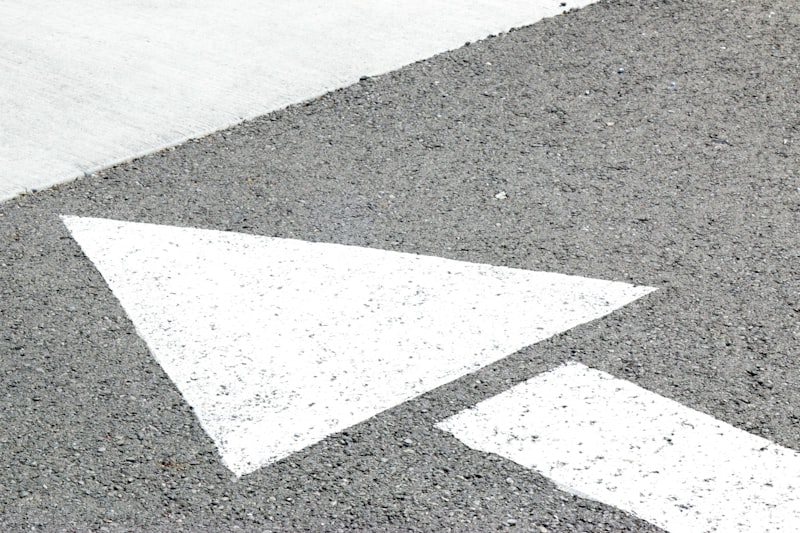
When your parking lot gets freshly striped, the most practical question from everyone waiting to use it is simple: how long until cars can go back on it? The answer depends on what type of paint was applied and what conditions look like outside.
Here is the direct answer for each common striping material, followed by the factors that move those numbers in either direction for Salt Lake Valley lots specifically.
Drying Times by Paint Type
Water-Based Traffic Paint
Water-based traffic paint is the standard material used on the majority of commercial parking lots in the Salt Lake Valley. It requires a minimum surface temperature of 50 degrees Fahrenheit to cure correctly, a threshold established by the National Pavement Contractors Association for water-based traffic coatings.
- Foot traffic: 30 to 60 minutes in normal conditions
- Slow vehicle traffic (walking speed, careful turns): 1 to 2 hours
- Normal vehicle traffic (full parking lot use): 4 to 6 hours
- Full cure (paint at maximum hardness and adhesion): 24 to 48 hours
The distinction between “dry” and “fully cured” matters. Paint that is dry to the touch in two hours can still be scratched or lifted by a hard turn from a heavy vehicle before the full cure is complete. For high-turnover lots like retail centers, the responsible guidance is 4 to 6 hours before reopening to vehicle traffic.
Thermoplastic
Thermoplastic is a heat-applied material. The contractor heats it to around 400 degrees Fahrenheit, applies it to the surface, and it cools and hardens in place.
- Return to traffic: 15 to 30 minutes after application
- Full cure: essentially immediate. The material is solid when it cools.
This is the main operational advantage of thermoplastic on active lots. An overnight crew can apply thermoplastic markings at a retail center and have the lot fully operational before the first business opens in the morning with no risk of tracking. With water-based paint, an early morning application at 3 a.m. may still be tacky at 7 a.m. if temperatures are low.
Oil-Based Paint
Oil-based traffic paint is less commonly used today due to VOC restrictions in some jurisdictions and longer drying times, but it still appears on some older commercial lots.
- Foot traffic: 2 to 4 hours
- Vehicle traffic: 6 to 8 hours
- Full cure: 48 to 72 hours
Oil-based paint takes significantly longer than water-based in all conditions. If you see fresh striping that takes well over 8 hours to feel fully hard underfoot, it was likely oil-based.
Epoxy and MMA (Methyl Methacrylate)
These materials are used in parking structures, covered garages, and interior warehouse floors rather than outdoor lots.
- MMA: extremely fast. Return to traffic possible in as little as 30 to 60 minutes.
- Epoxy: 4 to 8 hours depending on formulation and temperature
What Affects Drying Time
Temperature
This is the most important variable, and especially important in the Salt Lake Valley.
Water-based traffic paint requires a minimum surface temperature of 50 degrees Fahrenheit to cure correctly. Below that threshold, the water in the paint cannot evaporate fast enough for the resin to form a proper film. The paint stays tacky, picks up tire rubber, and eventually fails.
This is why we do not apply water-based striping paint in the Salt Lake Valley from November through approximately mid-April, even on days when air temperatures are above 50 degrees. The pavement surface takes longer than the air to warm, and a morning application on a 55-degree day can be applied over a surface that is still in the 40s.
On the warm end: when asphalt surface temperatures exceed 130 degrees Fahrenheit in direct July or August sun in the Salt Lake Valley, water-based paint can cure extremely fast, sometimes too fast for the crew to work it evenly across a section. Experienced crews apply in early morning hours on the hottest summer days and avoid application after noon in peak summer.
Ideal temperature range for water-based striping in SLC: 60 to 90 degrees Fahrenheit surface temperature. Late spring mornings and fall afternoons hit this range consistently.
Humidity
Lower humidity means faster drying. This is where Salt Lake City’s climate is genuinely favorable for striping work. The valley’s semi-arid conditions typically run 20 to 40 percent relative humidity during the April through October application window. That is significantly lower than what contractors work with in coastal markets, and it translates to consistently faster dry times than the national average guidance suggests.
In practice: water-based paint that might need 6 hours before vehicle traffic in a humid coastal market often reaches that point in 4 hours in Salt Lake City conditions. That matters for scheduling lot reopening.
Compare that to monsoon season (late July through September in parts of Utah) when humidity can spike briefly. Applications scheduled during high-humidity windows should use the upper end of the time range, not the lower end.
Wind
Moderate air movement accelerates drying. Still air on a warm day slows evaporation from the surface. If a lot is enclosed by buildings that block air movement, add time to the drying estimate.
Surface Porosity
Fresh sealcoat is the ideal surface for water-based paint adhesion and consistent drying. The Utah Asphalt Pavement Association recommends sealing before restriping for exactly this reason: sealed surfaces produce a denser, more consistent paint film that cures faster and lasts longer than paint applied to bare oxidized asphalt. Bare asphalt is more porous and absorbs some of the paint into the surface rather than leaving a full film on top.
If your lot is due for both sealcoating and striping, the correct sequence is: sealcoat first, let it cure for 48 to 72 hours, then stripe. This gives you better paint adhesion, longer line life, and a consistent drying window.
Practical Guidance for Scheduling Lot Reopening
For retail and high-traffic commercial lots
If the job runs overnight (9 p.m. to 4 a.m.) using water-based paint in normal summer conditions, the lot can typically reopen at 8 to 9 a.m. That gives paint 4 to 5 hours of cure time before the morning rush.
If the job is scheduled during the day, plan for a 4 to 6 hour closure minimum after the final section is painted, not from when the crew started.
For thermoplastic jobs
The lot can be reopened almost immediately after the thermoplastic cools, typically within 30 minutes of application. Night crews using thermoplastic at active retail sites can finish at 5 a.m. and have the lot fully ready by 6 a.m.
Communicating with tenants
Property managers with multi-tenant retail or office lots should notify tenants the evening before a striping job, specify the re-open window, and have cones at key entry points during the cure period. We provide a written scope with estimated timelines before every job so this communication is straightforward.
How to Tell If Paint Is Dry
The thumb test is the contractor’s standard: press the pad of your thumb firmly against the painted line. If it leaves no mark and no paint transfers, the paint is ready for foot traffic. For vehicles, wait until the line has no give when you press. It should feel as hard as the surrounding asphalt surface.
Do not use the “no tack to touch” test as the standard for vehicle traffic. Paint that does not stick to a finger is still soft enough to mark under a hard tire turn.
You can also reference UDOT’s pavement marking guidelines for Utah-specific surface temperature and application conditions used on state roads. The same temperature standards apply to commercial lot striping.
For any Salt Lake Valley commercial lot that needs restriping, we coordinate the job timing around your operations schedule and give you a written re-open window before we start. Request a free estimate and we will plan the schedule around what your lot needs.